
Excavator
The right solution for every industry from WESSEL-Hydraulik
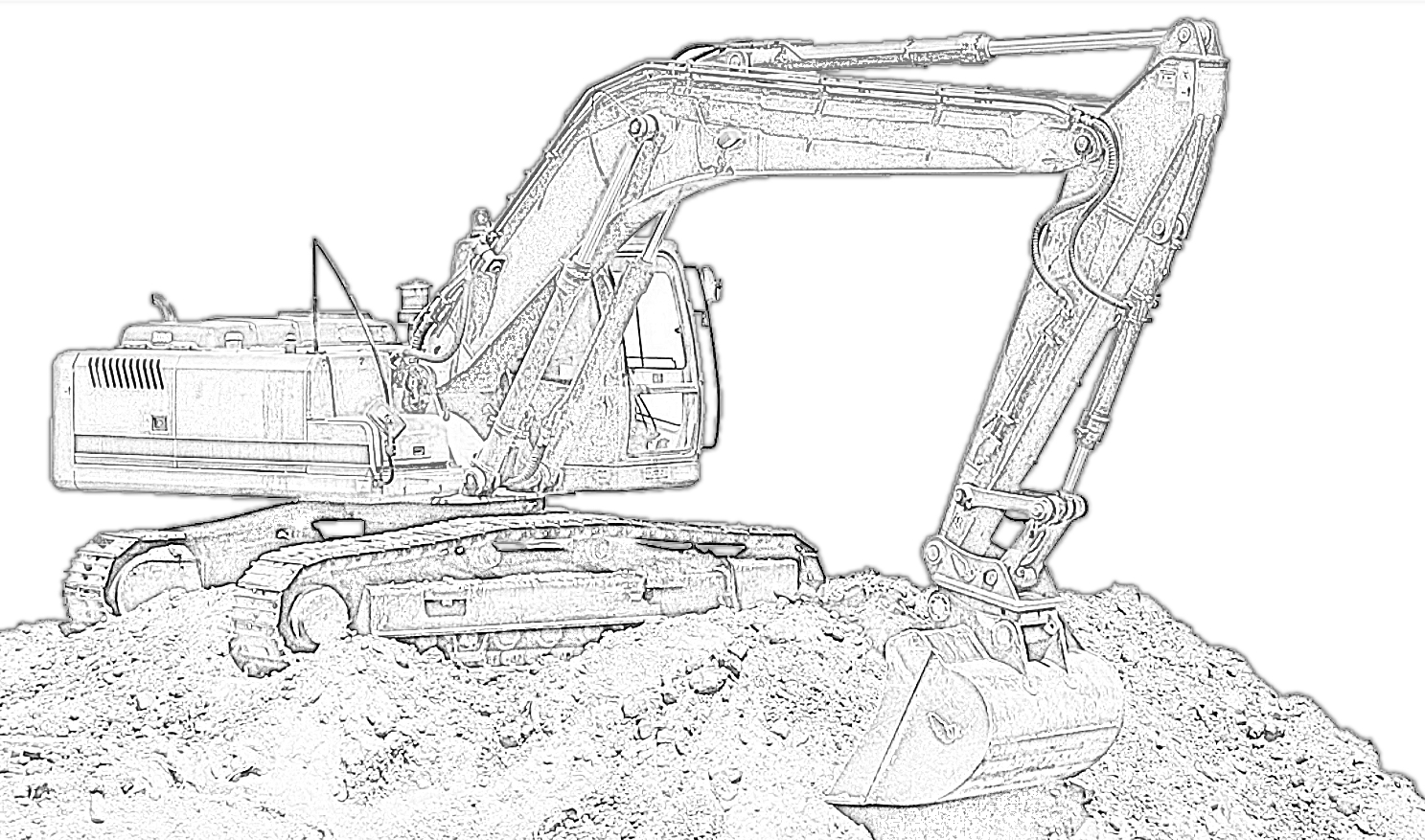
1 Load Holding Valve for Boom Cylinder
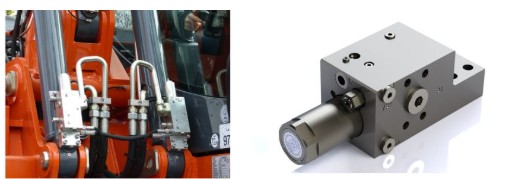
Load holding valve for stick cylinder prevent uncontrolled cylinder movement in the event of a pipe or hose rupture. In some countries, hose rupture protection valves are legally required when performing load or lifting operations with construction machinery. They serve to position a boom precisely and stably and enable uniform motion sequences. Load holding valves can compensate for leakage at spools in main control units of older construction machinery. WESSEL hose rupture protection valves are characterized by very good sensitivity and very direct transmission of joystick movement. They are also always leak-free. The load holding valve in the standard version can be used for most standard applications.
2 Load Holding Valve for Stick Cylinder
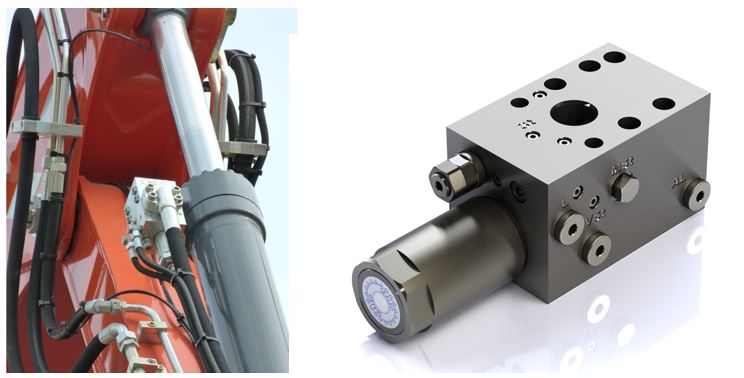
Load holding valve for stick cylinder prevent uncontrolled cylinder movement in the event of a pipe or hose rupture. In some countries, hose rupture protection valves are legally required when performing load or lifting operations with construction machinery. They serve to position a boom precisely and stably and enable uniform motion sequences. Load holding valves can compensate for leakage at spools in main control units of older construction machinery. WESSEL hose rupture protection valves are characterized by very good sensitivity and very direct transmission of joystick movement. They are also always leak-free. The load holding valve in the standard version can be used for most standard applications.
3 Load Holding Valve as Modular System
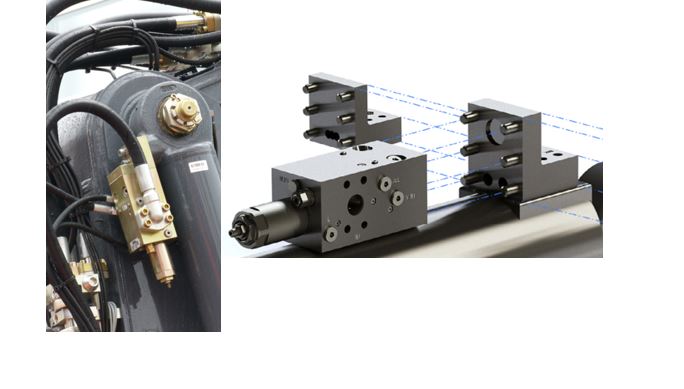
The load holding valve in modular design can be used for most standard applications. In contrast to the standard design LHB-4N, the hose rupture protection valve LHB-4F has the connection Z (cylinder) flanged and is therefore interchangeable for other connection sizes. CD 61 and CD 62 in 3/4″, 1″ and 1 1/4″
4 Load Holding Valve Regeneration, Save Fuel and Increase Productivity
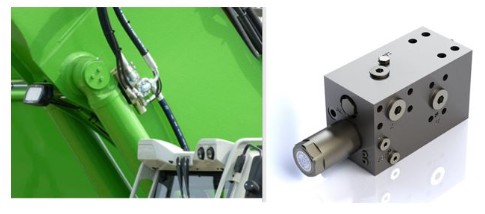
The load holding valve of design LHB-3R features an internal regeneration circuit. The returning volume flow is accumulated by an internal check valve and routed to the rod side as required. This allows the cylinder to be retracted without requiring a delivery volume from the pump.
5 Counter Balance Valve for Travel Motors
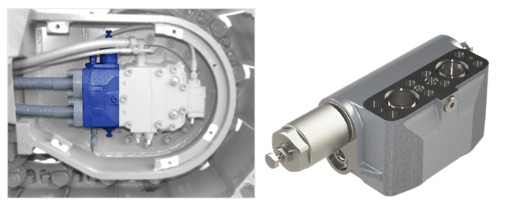
Counter balance valves are used as safety valves in hydraulically driven construction machinery. They prevent excessive speeds when driving on gradients. At the same time, they protect the travel motor from excessive speeds. The brake valve is flanged either to the drive motor of a wheeled excavator or to the drive motors of a tracked excavator. It can also be used for rotary motors in other applications.
6 Oil Temperature Controller
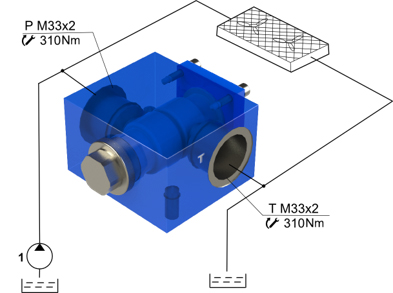
The oil temperature controller enables temperature-dependent control of an oil flow. With the aid of a thermoelement, a valve spool is continuously switched from its open position to a blocking position. This results in a pressure increase in the cooling pump circuit, which leads to an increase in the flow rate through the cooler.
7 Hydraulic Diverter, 6-2 Directional Control Valve
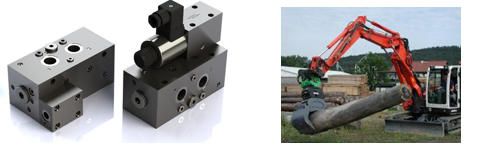
With a 6/2 or 6/3 directional control valve, the volume flow behind a main section can be distributed to either 2 consumers. The directional control valves are available in two versions: Directional control valve 6/3 with a center position Directional control valve 6/2 without center position Without center position, the main consumer is controlled in the unactuated state of the directional control valve. In the actuated state, the new additional consumer is operated. Switching is performed hydraulically or electrically. In the electrical version, the control pressure required for the switching operation is taken from the high-pressure supply line, so that no additional pilot pressure needs to be provided. The valves are not leak-free. Pressure relief devices for the additional consumer must be installed externally. In the 6/3 version, the center position is assumed when not actuated. In this position, all inlets and outlets are blocked from each other.
8 Operating Single-Acting Consumers – Switchable Flow Control Valve
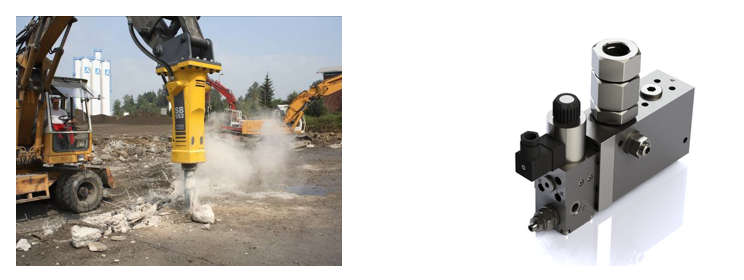
The flow control valve enables single-acting additional consumers such as hammers and mowing units to be operated on a machine. The flow control valve of design FC1-1N or FC1-2N is a 2-way or 3-way flow regulator (pressure compensator) for volume flows up to 550 l/min. The valve can therefore be used in LS or NFC systems. The additional consumer can be operated simultaneously with the normal machine functions. The volume flow and pressure to the additional consumer is independent of the pressure and volume flow of the main consumers in the machine. In both operating modes, the additional consumer can be activated electrically or hydraulically or remain permanently switched on. The size of the volume flow to the additional consumer can be manually adjusted by the user. The maximum pressure limitation for the additional consumer is also set by the user. The pressure limitation is based on the principle of pressure cut-off and thus regulates the volume flow via the flow control function until it falls below the set maximum pressure. A preloaded check or throttle check valve can be attached to connection H for the additional consumer. This check valve prevents influences of the consumer on the control of the flow control valve on the one hand and ensures on the other hand that the flow control valve is always preloaded to the extent necessary for trouble-free operation (> 8 bar) when operating consumers with low starting pressures or pulling loads.
9 Leak-Free Shut-Off of Consumers at Main Control Block
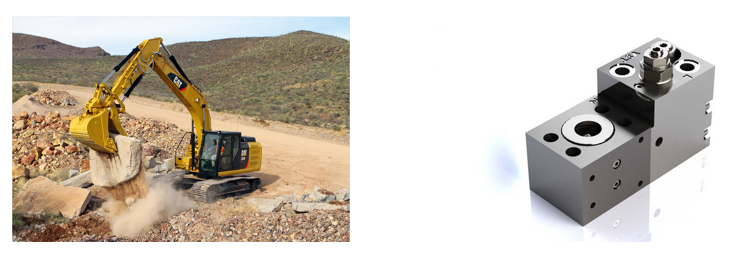
Since leakage occurs at directional control valves in spool design in the neutral switching position, this can lead to slow lowering of the boom or load. If this is not desired, it can be prevented by leak-free shut-off. The shut-off is absolutely leak-free. The design is in seat construction with hardened components. An integrated pressure relief valve protects the consumer from excessive pressures in the blocked state.
10 Valves for Controlling Quick Couplers
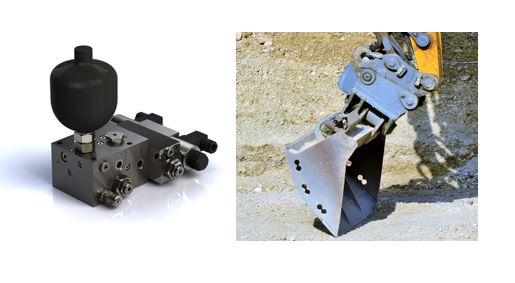
Valves for Controlling Quick Couplers Quick coupler systems are used for easy changing of tools on construction machinery without the operator having to leave the cab. The main functional part of the quick coupler system is a hydraulic cylinder that opens and closes the locking of the quick coupler for the changing operation and securely locks the quick coupler in the closed state.
11 Proportional Flow Control Valve for Double-Acting and Single-Acting Consumers
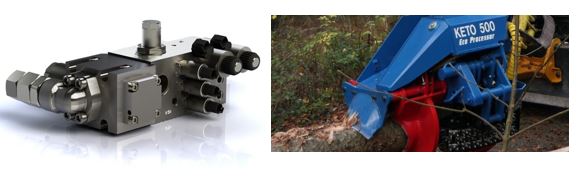
The valve enables two attachments to be operated independently of each other. By energizing the proportional pilot valves VStA or VStB, the 4/3 directional control valve is controlled. A double-acting attachment such as shears (opening/closing) is thus supplied via connections A and B. By energizing the proportional pilot valve VSt1, a volume flow regulated via an upstream pressure compensator is provided at connection H. This can be used for operating single-acting consumers, such as hammers or a compressor. Both consumers can be limited in maximum operating pressure via pressure relief valves that operate according to the pressure cut-off principle. The upstream 2-way pressure compensators keep the pressure differential constant. Thus, the consumers are supplied with the required volume flow independent of load. The valve provides an internal LS signal for the pump.
12 Limit Volume Flow and Pressure, Flow Control Valve FC2-2 Top
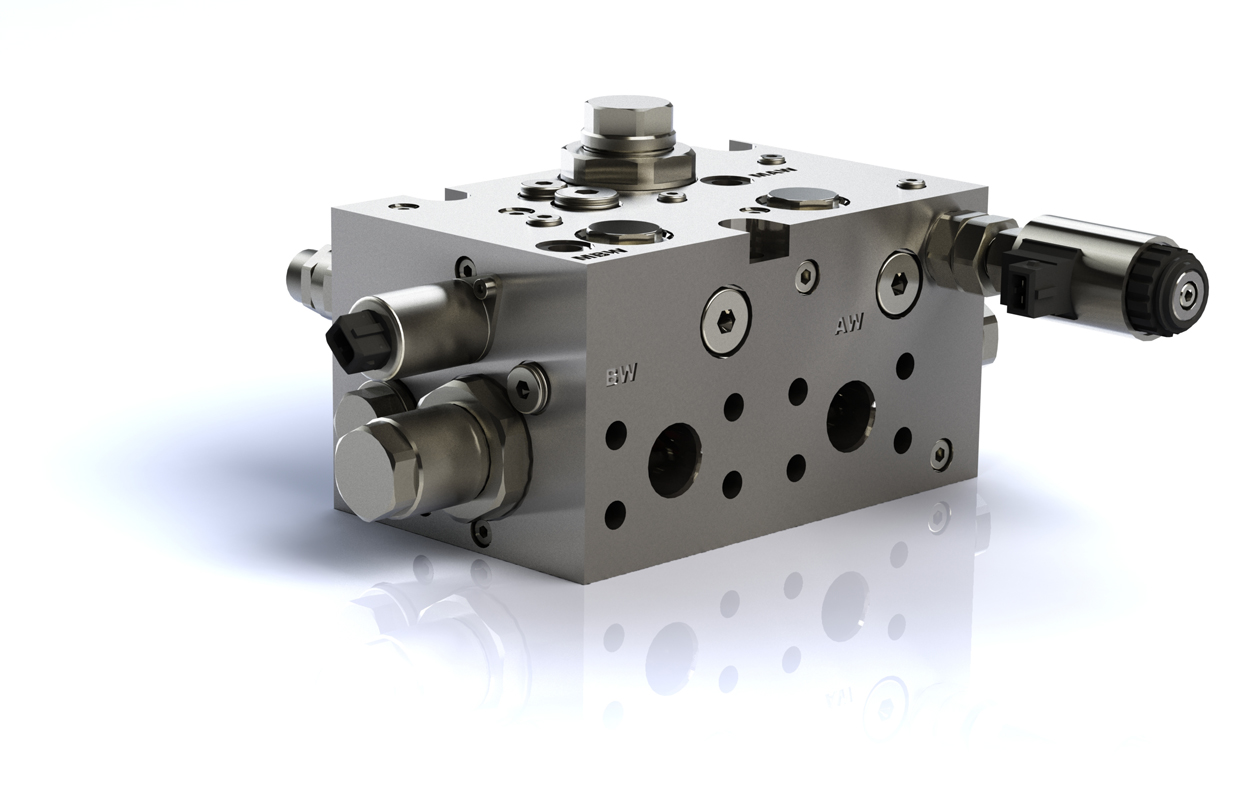
The flow control valve is ideally combinable with Wessel Tool Control+ and enables proportional adjustment of volume flow and pressure for double-acting additional consumers (e.g. milling cutters, mulchers). The tool can then continue to be operated via the joystick in the cab, but is reliably protected against overload. The volume flow can be electrically proportionally limited up to max. 400 l/min. In the inlet, a 3-way flow regulator is constructed with an electrically-proportionally adjustable orifice. The supply of the proportional valve is provided by the inlet volume flow. An upstream high-pressure-resistant pressure reducing valve guarantees usability up to 400 bar working pressure. The pressure compensator is arranged in the bypass and regulates the excess volume flow to the return side. The volume flow coming from the tool is routed past the orifice via check valves with low pressure losses back to the main control block. The maximum operating pressure is set proportionally via a pilot valve. When the pressure is exceeded, the pressure compensator is opened to the opposite side.
13 Reduce Return Pressure -> Increase Performance D32-NA
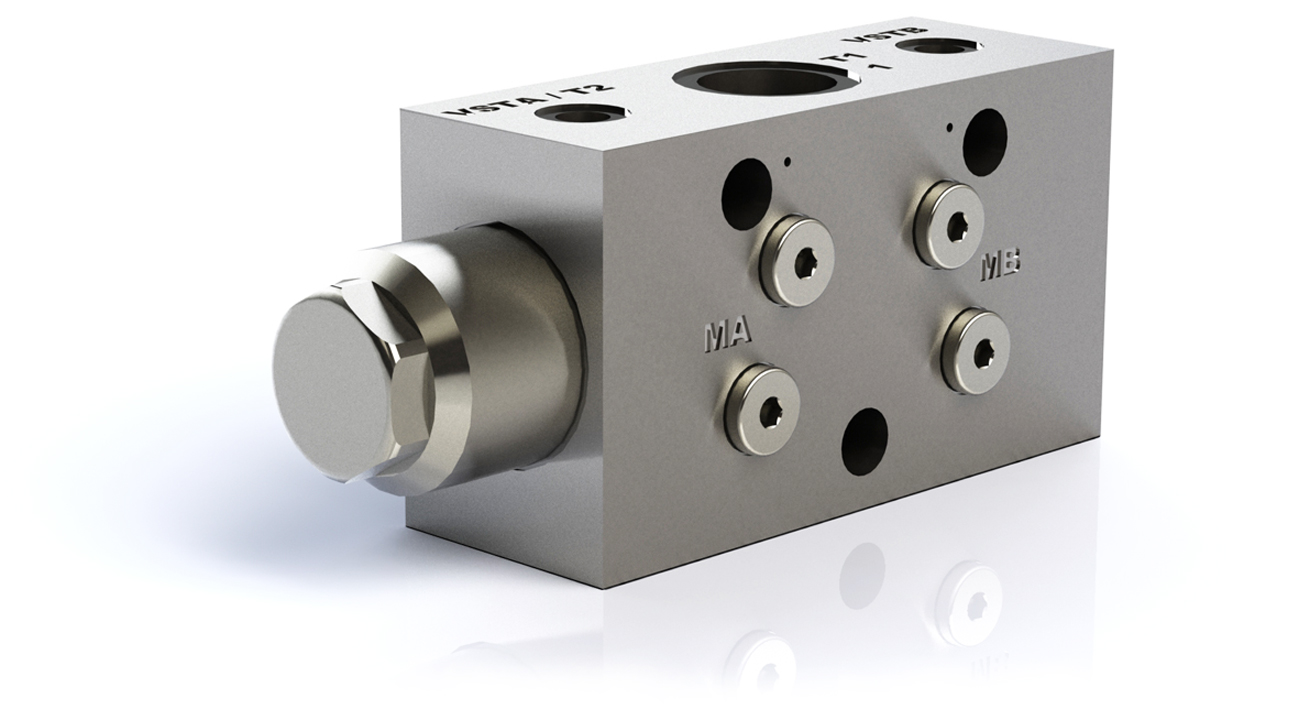
In many hydraulic applications, high return pressures cause unnecessary energy losses or even performance losses. As a result, the full force is not available at the tool, and in some cases the pump is swung back by the power control, so that speed losses must also be accepted. When cylinders are used in the attachment, volume flows on the piston side quickly result that double the max. pump volume flow. The main control valves are not necessarily designed for this. By means of an additional direct relief to the tank using a 3/3 directional control valve, these losses can be significantly minimized. A reduction of e.g. 30 bar at 400 l/min volume flow creates more than 20 kW additional power at the tool or correspondingly reduced losses. The valve thus operates as a bypass valve to the main control block. The valve is available in 3 sizes: 137.901.002.9 G1″ 200 l/min 138.901.001.9 G1 ¼” 400 l/min 139.904.001.9 SAE 1 ½” 600 l/min
14 Return Relief Valve D22-1N
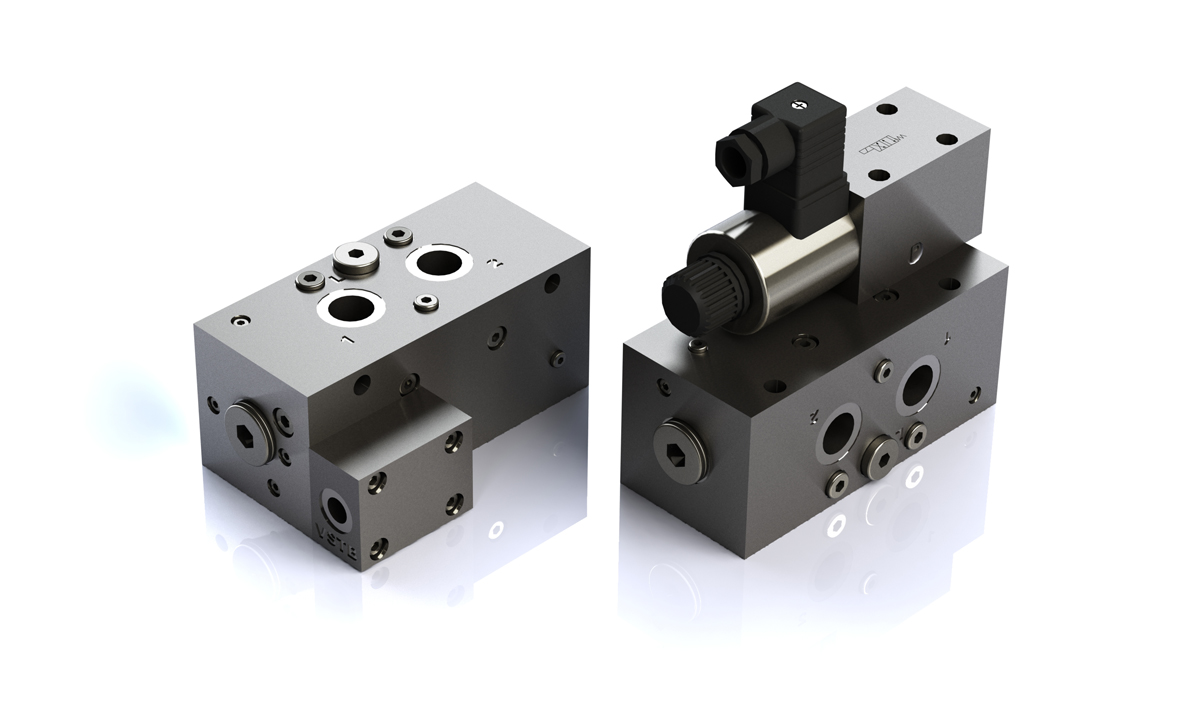
The 2/2 directional control valve serves to connect or disconnect a hydraulic connection (similar to a ball valve). It is a pilot-operated valve designed for high pressures and volume flows and is therefore particularly suitable for mobile applications. In many hydraulic applications, high return pressures cause unnecessary energy losses or even performance losses. By means of an additional direct relief to the tank using a 2/2 directional control valve, these losses can be significantly minimized. A typical application is, for example, in construction machinery to connect the return line of hydraulic tools directly to the tank, bypassing the main control valve. When operating hydraulic hammers, this is often necessary to achieve proper function of the device; in other applications, such as shear operation, a significant increase in performance can be achieved.
15 Pressure Control Valve, Cab Control FC2-CC
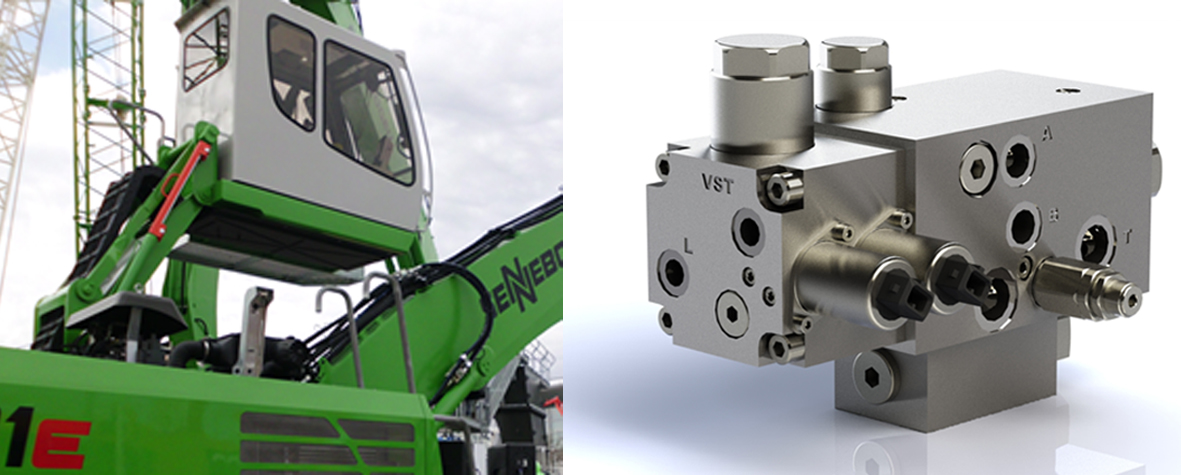
Raising and lowering the driver’s cabin often places high demands on the comfort function. Smooth starting and braking are required, as well as leak-free holding in the raised position. The cabin control is a 4/3-way valve designed for operation with a constant displacement pump. The integrated inlet pressure compensator reduces pressure losses to a minimum. The main spool can be adjusted electrically-proportionally; with switching actuation, a ramp is imposed on the control spool through an internal circuit. Output A is locked leak-free by an unlockable check valve. Raising and lowering the driver’s cab often places high demands on the comfort function. Smooth starting and braking are required, as is leak-free holding in the raised position. The cab control is a 4/3 directional control valve designed for operation with a constant-displacement pump. The integrated inlet pressure compensator reduces pressure losses to a minimum. The main spool can be adjusted electrically and proportionally; with on/off actuation, a ramp is applied to the control spool via an internal circuit. Outlet A is locked leak-free by a pilot-to-open check valve.
16 Check Valves CSV-1N
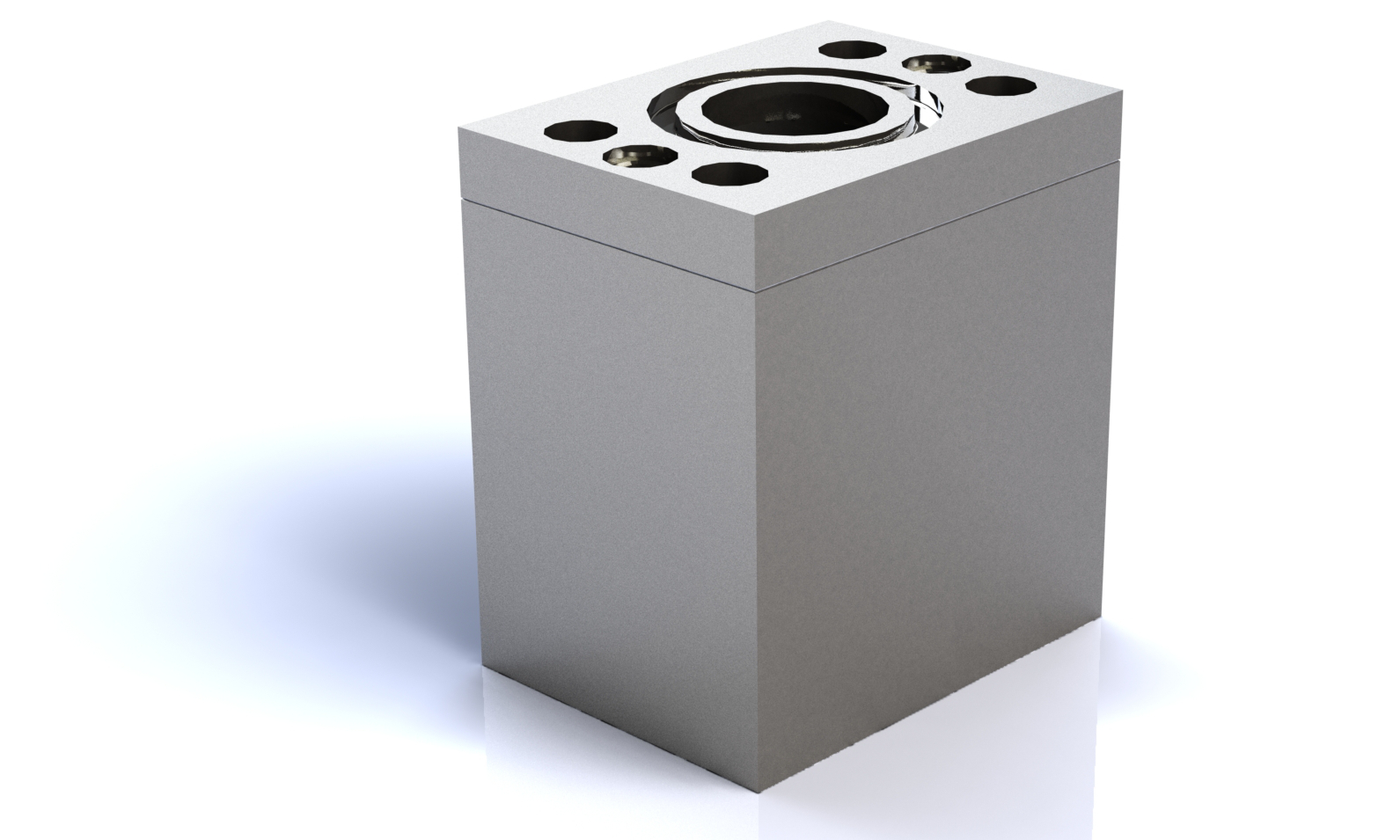
The valve is installed in the return line directly upstream of the tank inlet. The oil flowing back from the consumers is preloaded and is thus available for make-up functions and the prevention of cavitation. The valve is available with various preload pressures (3 bar, 4.5 bar). Specific housings adapted to customer requirements are possible.
17 Priority Valve FC1-1D
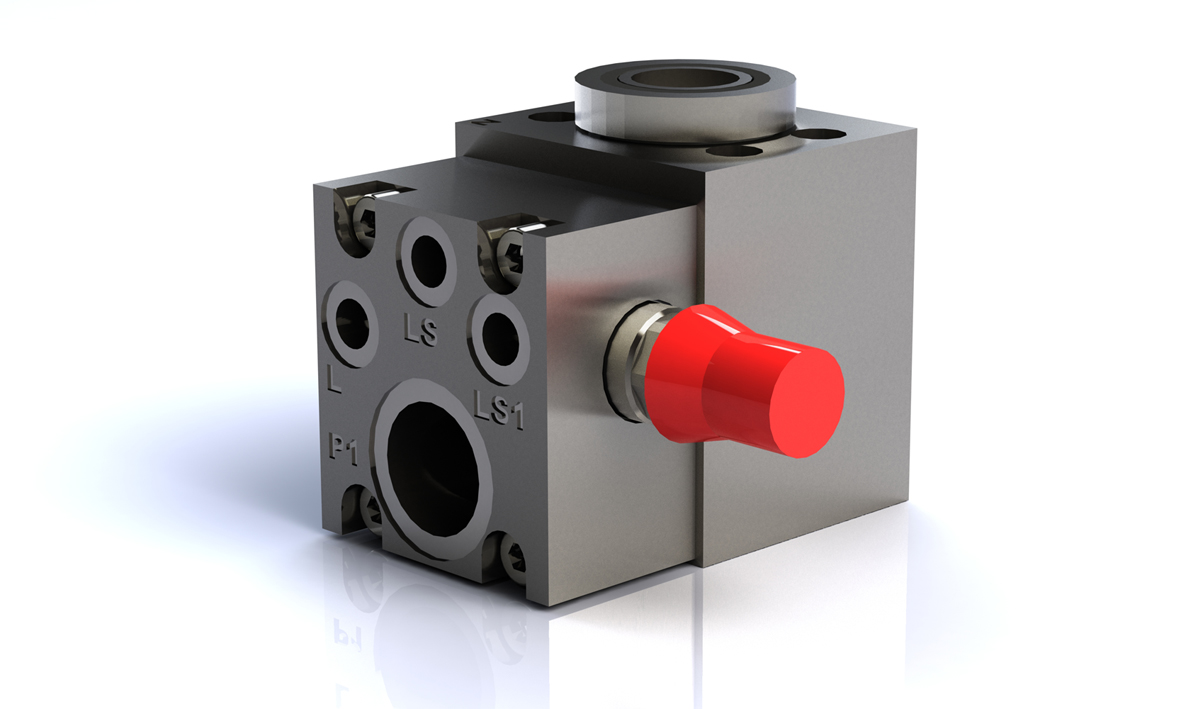
Priority valves are used to supply an additional consumer with a priority volume flow. The residual volume flow is provided to supply the existing main functions on the machine. The valve is suitable for open-center and closed-center systems. The divided volume flow to the additional consumer has priority over the main functions. The valve is flanged directly to the pump or to the pump inlet of the main control. The combination with other valves enables a wide variety of applications.
How can we help?
Head of Sales – Field Sales & Development
Dr.-Ing. Gerald Fees