
LHV-3N
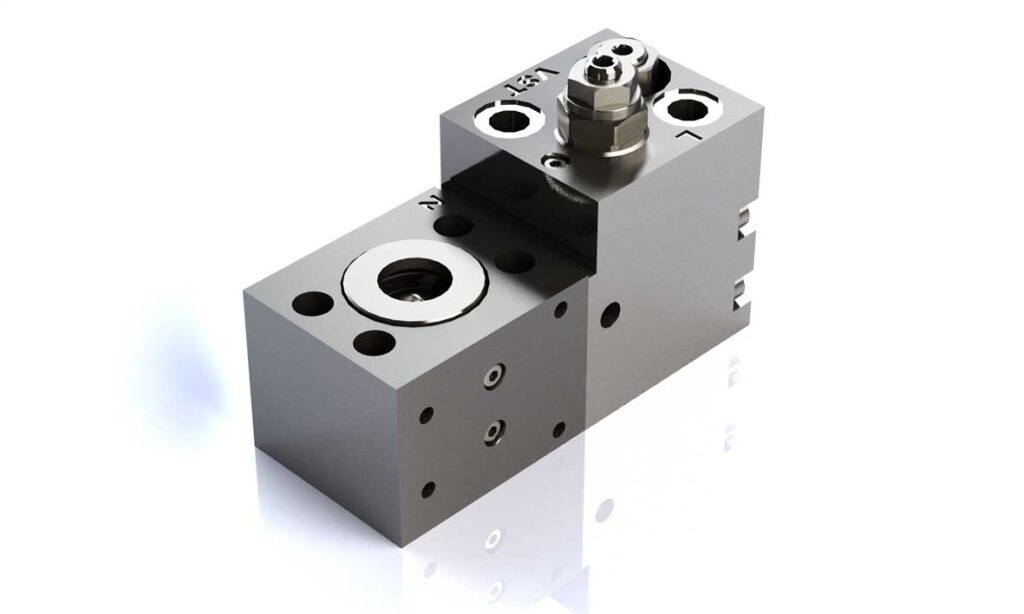
Load holding valves or pilot-operated check valves are used to hold a hydraulic actuator in position without leakage when main control valves in spool design experience leakage in neutral position, which leads to load drop. The shut-off is absolutely leak-free. The valves are designed in poppet construction with hardened components. An integrated pressure relief valve protects the actuator from excessive pressures when locked. The check valve is unlocked hydraulically via pilot pressure. The valve can be flange-mounted directly to the main control block of the construction machine.
Leak-free shut-off of actuators at the main control block
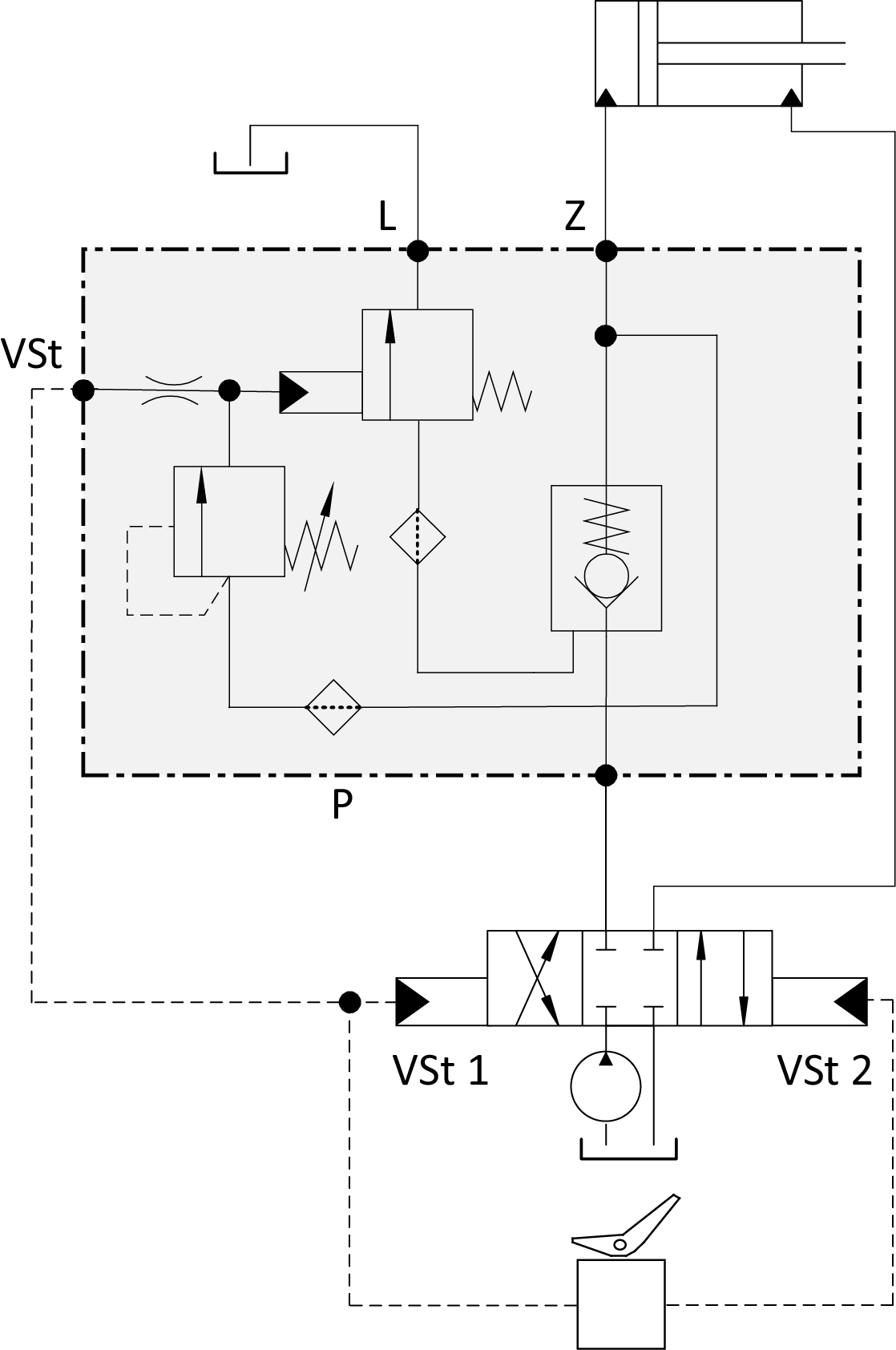
Since directional control valves in spool design experience leakage in neutral position, this can lead to slow lowering of the boom or load. If this is not desired, it can be prevented by leak-free shut-off. Via a check valve, the flow passes freely from port P to port Z. When no pilot pressure is applied, the actuator at port Z is shut off leak-free. To open from Z to P, a pilot pressure must be applied at VST (> 6 bar). Typically, hydraulically actuated control valves open at a pilot pressure between 7 and 10 bar. Because the pilot-operated check valve opens before the control spool, a decompression shock can be avoided. When actuated, a minimal flow passes into the leakage oil port. To protect the actuator from external influences, a pressure relief function is integrated. The pressure relief valve must be set approximately 10 bar lower than the pressure relief valve of the main control system.
Features
Technical Data
| Design | Port Size | Maximum Operating Pressure | Maximum Flow Rate |
|---|---|---|---|
| LHV-3N | SAE 3/4"; SAE 1"; SAE 1 1/4" |
Application:
- Excavators- Wheel loaders
- Material handling machines
Configuration:
hydraulically actuatedCircuit Diagram
Downloads
No downloads available.